Ceará Style Decor: Craft, Texture and Objects Around Paraipaba

A cultural guide to Ceará craft and decor near Guajirú: carnaúba straw, clay, hammocks, lace, crochet and the handmade objects that quietly define this coast.
Not every guest reads Ceará through the wind.
Some read it through texture.

The dry sound of straw.
The weight of clay.
The geometry of lace.
The shadow of a hammock.
The quiet intelligence of objects made by hand.
Around Guajirú, the first language of the coast is usually wind. Direction, tide, lagoon, downwinder, session, progression. For a rider, the landscape becomes technical very quickly.
But there is another way of entering Ceará.
Through its houses. Through its baskets. Through its handmade objects. Through the materials that appear again and again in daily life: straw, cotton, clay, wood, lace, leather, fiber, rope, shadow.
A short visit to Paraipaba, especially around the local craft shops of Setor D2 and places such as Artesanato da Bete / Beth Mendes, opens that other map.
Less about riding conditions. More about the material culture of the coast.
What "artesanato" means in Ceará

In Brazil, the word artesanato is often translated as craft. But in Ceará, it carries more than that.
It is not only decorative work. It is domestic knowledge. It is economy. It is memory. It is technique passed through families, villages, associations and small shops. It belongs to the house before it belongs to the boutique.
A basket is not only a basket. A hammock is not only a hammock. A lace textile is not only a table piece. A clay pot is not only rustic decoration.
These objects come from use.
They were made to rest, carry, shade, store, serve, dress, filter light, protect from heat, organize food, soften rooms and make daily life possible in a climate of sun, wind and distance.
That is what makes them beautiful.
The best handmade objects in Ceará do not need to announce themselves as tropical. They already belong to the territory.
Paraipaba: a quiet stop near the wind coast
Paraipaba sits within the broader coastal geography that connects Fortaleza, Paracuru, Lagoinha, Trairi, Guajirú, Flecheiras and Mundaú.
For the kite traveler, it is not usually the main destination. But that is exactly why it is interesting.
It is a short inland detour from the wind coast — a place where the visual language changes slightly. Less water. More road. More clay. More everyday commerce. More objects. More local shops.
Around Setor D2, Paraipaba has become associated with craft shops, regional objects and small-scale commercial activity. Artesanato da Bete / Beth Mendes appears as one of those local stops: not a museum, not a luxury showroom, but a place where objects, materials and domestic pieces can be seen together.
For THKC, this kind of visit matters because it expands the experience of the week.
A kite trip can easily become only about sessions. But a place is never only its sport.
Ceará is also found in what people make, buy, touch, hang, cook with, sleep in and carry home.
Carnaúba straw and the intelligence of fiber

One of the most important materials in Ceará's craft culture is palha de carnaúba.
Carnaúba is deeply associated with the Northeast of Brazil. Its straw and fibers can be used for baskets, hats, fans, mats, trays, decorative pieces, lampshades and domestic objects.
The visual language is immediately strong: dry, pale, graphic, flexible, architectural.
A woven straw object can look simple from far away. But when you get closer, you see the intelligence of repetition. The hand has created structure out of softness.
This is where Ceará craft becomes surprisingly contemporary.
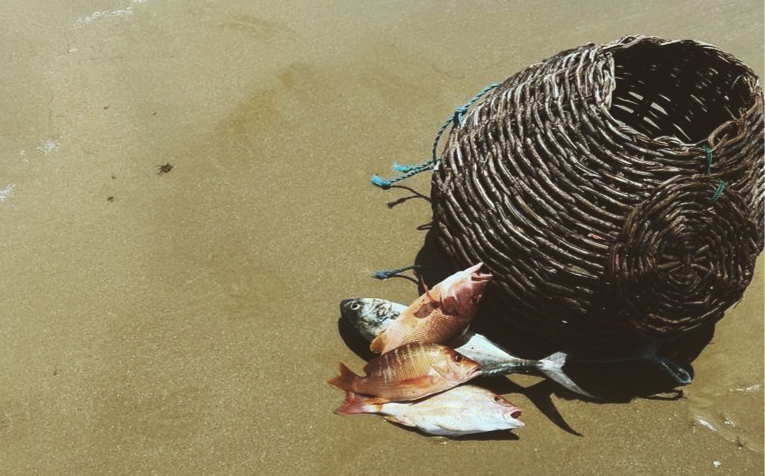
A fan made of carnaúba against a clay wall. A straw mandala on a white surface. A woven basket in a beach house. A lamp made of natural fiber over a table. A tray holding fruit after a morning session.
Nothing excessive. Nothing loud. Just material, proportion and shadow.
This is the most useful lesson for anyone interested in Ceará style decor: natural materials do not need to be overstyled. They need space.
Clay, ceramics and the weight of the interior

If straw belongs to air and movement, clay belongs to weight.
Ceramics and clay objects bring another part of Ceará into the room: the interior, the earth, the kitchen, the table, the slower rhythm of domestic life.
This is important because a beach house can easily become too light, too white, too empty, too generic. Clay gives it gravity.
A handmade ceramic bowl changes the way fruit sits on a table. A clay pot changes the feeling of a corner. A simple vase brings the dry landscape inside. A matte surface feels more honest than a polished souvenir.
The best pieces are rarely perfect. They show irregularity, small marks, uneven tones, the trace of the hand.
That imperfection is not a flaw.
It is the object's memory.
Hammocks: the architecture of rest
In the Brazilian Northeast, the hammock is not an accessory.
It is furniture. It is shade. It is rest. It is social space. It is architecture for the body.
A hammock changes the use of a veranda. It slows the afternoon. It teaches the body to understand wind differently.
For a kite guest, this object has an obvious emotional intelligence. After a session, after salt, after sun, after lunch, the hammock becomes part of recovery. Not in a fitness sense. In a human sense.

It is one of the most honest objects someone can bring back from Ceará, if chosen well.
Good cotton. Good weight. Calm color. Strong finishing. No need for cliché.
The hammock does not need to look like a souvenir. It should look like something that will be used.
Lace, crochet and textile intelligence
Ceará is also known for textile traditions such as renda de bilro, labirinto, embroidery and crochet.
These are often associated with women's domestic work, but it would be a mistake to reduce them to something delicate or decorative.
There is real structure here.
Renda de bilro, made through the crossing of threads with small bobbins, produces patterns that can feel almost architectural. Labirinto lace works through openings, repetition and negative space. Crochet appears in clothing, beachwear, table pieces and small decorative objects.
For the traveler with an eye for fashion, this is one of the richest areas to observe.
A white crochet dress. A lace detail on a table. A handmade beach cover-up. A textile folded over wood. A curtain that lets air and light pass through.
These pieces speak to a kind of femininity that is not obvious or overdesigned. It is patient, technical, domestic and precise.
The best textile pieces should not feel like costume.
They should feel like air.
From craft to fashion and interior design

Many of the same materials that appear today in international resortwear and interior design have existed in Ceará for generations as part of everyday life.
Raffia, straw, crochet, lace, woven bags, natural fibers, handmade sandals, baskets, clay objects, hammocks, wooden stools, rustic ceramics — the global fashion and design world often treats these as seasonal trends.
In Ceará, they are not trends.
They are part of a material vocabulary.
This distinction matters.
A straw bag is not interesting only because it resembles something seen in a luxury boutique. It is interesting because it comes from a longer relationship between hand, climate and use.
A crochet piece is not valuable only because resortwear has made crochet fashionable again. It is valuable because the technique carries time.
A ceramic pot is not beautiful because it fits a Pinterest moodboard. It is beautiful because it belongs to the table, the floor, the kitchen, the earth.
The contemporary eye can learn a lot from this.
The goal is not to make a house look "Brazilian". The goal is to allow a few real objects to bring the place into the house.
How to look and buy well
The best way to enter a craft shop in Ceará is slowly.
Do not look only for the most colorful object. Do not look only for what photographs well. Do not look only for something that says "Brazil".
Look for proportion. Look for material. Look for finishing. Look for weight. Look for pieces that can live in your home, not only remind you of a trip.
Ask where something was made. Ask what material it uses. Ask what people use it for locally. Ask if there are different sizes. Ask if the piece is made by hand, by a local producer, by an association or sourced from another region.
A respectful buyer is not only buying an object.
They are learning how to see.
And in a place like Ceará, that is part of the experience.
What to look for in Paraipaba
For someone joining a THKC week, a visit to Paraipaba can become a quiet cultural excursion. Not a shopping tour in the shallow sense. More like an introduction to local objects.
Carnaúba straw pieces — fans, baskets, trays, decorative wall pieces, lampshades and woven objects.
Baskets and storage pieces — useful, beautiful, easy to place in a home.
Hammocks — especially calm colors and good cotton.
Clay and ceramic pieces — bowls, pots, vases and table objects.
Crochet and lace — beachwear, table pieces, curtains, textile details.
Wood and domestic furniture — small stools, shelves, benches, simple handmade pieces.
Objects for the table — trays, sousplats, bowls, ceramic pieces and woven surfaces.
The ideal piece is not the loudest one. It is the one that still feels good after the trip is over.
The THKC way of seeing it
At The Hospitality Kite Club, the week is designed around wind, progression and the rhythm of the coast.
But the experience is never only technical.
There is the villa. The table. The music. The conversations. The architecture of shade. The local road. The village. The objects. The materials.
Some guests arrive for the water and discover the culture around it. Others arrive with someone who rides, and find their own way of reading the place.
Both are valid.
One person may remember a downwinder. Another may remember a handmade basket found in Paraipaba. One may speak about wind direction. Another may speak about the color of clay, a hammock on a veranda, a piece of straw against a wall, the quiet beauty of something made by hand.
A good trip allows both forms of attention.
That is the real luxury of Ceará: not excess, but access.
Access to wind. Access to slowness. Access to material culture. Access to objects that still carry the intelligence of the hand.
Ceará style is not a decoration trend.
It is a way of letting the place remain present after you leave.

Comments